
Bathtub Design: Creative Ways to Make the Tub a Standout Feature

For a long time, the bathtub was treated as a pretty standard bathroom feature. It went against a wall, usually under a window if you were lucky, surrounded by tile, and that was about the extent of the conversation.
But when we start designing a bathroom renovation today, there are so many more possibilities.
A bathtub can be a quiet architectural feature, the focal point of the entire room, part of a larger wet room, or simply a really comfortable place to unwind at the end of the day. The best design depends on the homeowner, the architecture of the house, and how the bathroom is actually going to be used.
At DuBois Design+Build, we love looking beyond the obvious layout and asking a better question: What could this space become?
Here are some bathtub design ideas, including a few possibilities homeowners may not realize are options until they start working through the design process.

1. Let the Bathtub Have Its Own Moment
Not every bathtub needs to be tucked against a wall.
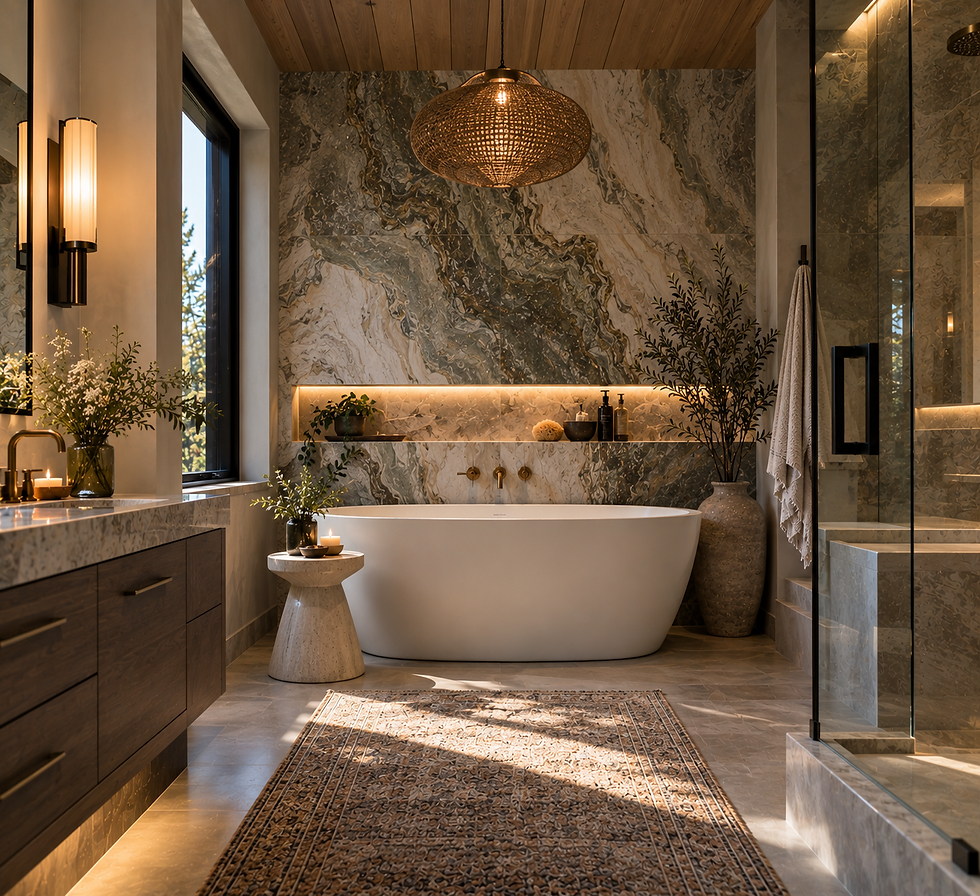
If the room allows for it, a freestanding tub can become an architectural element all on its own. The key is giving it enough space to actually feel intentional. Cramming a freestanding tub into a space designed for a built-in tub usually defeats the purpose.
Instead, consider the entire composition around it. A beautiful window, interesting wall treatment, statement light fixture, natural wood detail, or floor-mounted tub filler can turn that area into one of the best views in the house.
This is especially effective when there is an existing architectural feature worth preserving. In Project Smugglers, for example, preserving the gorgeous natural wood around the windows was an important part of the bathroom design. Rather than fighting the character of the house, the updated bathroom was designed to complement it.
2. You Don't Have to Use a Traditional Tub Filler
The plumbing fixtures around the bathtub can completely change its look.
A freestanding tub can be paired with a floor-mounted tub filler for a dramatic, sculptural feel. Depending on the tub and surrounding construction, wall-mounted or deck-mounted fixtures may also be options.
This is where planning early matters. Moving plumbing after everything has been designed can become complicated and expensive very quickly. When the tub, fixture location, flooring, framing, and plumbing are considered together from the beginning, you have far more freedom.
It is one of the reasons we approach bathroom renovations through both design and construction. A beautiful idea is only useful if we also know how we are going to build it.
3. Think Beyond Tile Around the Tub
Tile is beautiful, but it isn't the only way to create interest around a bathtub.
Consider large-format porcelain, stone, slab material, plaster-look finishes, wood accents in appropriate locations, or a combination of materials. Even carrying one material from the floor up the wall behind the tub can create a dramatic effect without making the room overly busy.
This is also a great place to use a material you love but might not want throughout the entire bathroom.
If you are someone who likes a little more personality in your home, our post on Creative Design Choices That Completely Change the Vibe of a Space goes deeper into using materials and unexpected details intentionally.
4. Create a Ledge Instead of Adding More Furniture
One of the simplest bathtub upgrades is also one of the most useful.
If the layout allows for it, we love incorporating a built-in ledge near a tub. It gives you somewhere for a towel, bath products, a candle, a book, or a glass of wine without adding a little table that suddenly makes the room feel crowded.
A ledge can also help visually connect a freestanding tub to the architecture around it. Carry the countertop material onto it, use the same stone as another feature in the room, or coordinate it with the shower.
Small details like this are what make a bathroom feel like it was designed specifically for the people using it.

5. Make the Window Part of the Tub Design
Natural light and bathtubs are a pretty great combination.
If your bathroom has a window, don't automatically assume the tub needs to avoid it. Depending on privacy, window type, exterior views, and the layout of the room, the window can actually become part of the design.
Sometimes that means positioning a freestanding tub beneath an existing window. Other times, a remodel creates an opportunity to resize, replace, or even add windows to bring more natural light into the bathing area.
The goal isn't necessarily to create a giant wall of glass. It is to understand what the room needs and use natural light intentionally.
And if there happens to be a beautiful Colorado view on the other side, we're certainly going to consider taking advantage of it.
6. Don't Automatically Remove the Tub
We understand why this happens. A homeowner looks at an enormous old corner tub that hasn't been used in six years and says, "Get it out of here."
Sometimes we agree completely.
But before removing the bathtub altogether, it is worth asking whether you dislike having a bathtub or whether you dislike that bathtub.
Older tubs can consume an incredible amount of floor space. Replacing one with a better-proportioned freestanding or built-in tub can completely change how the room feels while keeping the option to take a bath.
If you genuinely never use one, then the conversation changes. A large, beautifully designed shower may be far more valuable to you than a tub you keep simply because you think a primary bathroom is "supposed" to have one.
That balance between designing for yourself and considering the home's future is something we think about often. We wrote more about it in Renovating for Resale vs. Renovating for You.
7. A Built-In Tub Can Still Feel Incredibly High-End
Freestanding tubs get a lot of attention, but they are not automatically the more luxurious choice.
A beautifully designed built-in tub can feel architectural, intentional, and extremely custom. The surround can become part of the room rather than simply something holding the bathtub.
Consider extending the tub deck into a bench, using the same slab material as the vanity, incorporating a ledge, wrapping the front in an interesting material, or creating a more substantial architectural surround.
There are also practical advantages. Some homeowners find built-in tubs easier to get into, easier to clean around, and simply more comfortable.
Luxury isn't about choosing whichever option is currently most popular. It is about choosing the one that works beautifully for you.

8. Lighting Around the Tub Deserves Its Own Plan
Bathroom lighting shouldn't stop at vanity sconces and a few recessed cans.
Think about what you want the room to feel like when you actually use the bathtub. Bright overhead lighting might be perfect while getting ready in the morning, but probably isn't what you want during a bath at night.
Dimmers, layered lighting, indirect lighting, decorative fixtures, and thoughtfully positioned sconces can completely change the experience of the room.
This is one of those upgrades that may not be the first thing you notice in a photograph, but you absolutely notice it when you live in the space.
Layered lighting is also one of the improvements we discuss in The Luxury Home Upgrades Homeowners Never Regret.

9. The Best Tub Design Starts With the Entire Bathroom
This might be the most important one.
Don't pick the bathtub first and then try to make everything else fit around it.
We look at the entire bathroom together: sightlines, plumbing locations, windows, natural light, shower size, vanity space, storage, circulation, materials, lighting, and how the homeowner actually moves through the room.
Sometimes shifting the tub a few feet unlocks a much better shower. Sometimes changing its orientation creates a better view when you walk into the bathroom. Sometimes choosing a slightly smaller tub makes the entire room feel larger.
And sometimes the best solution is one you would never have considered when looking at the original bathroom.
That is where thoughtful design really earns its place.
Your Bathtub Can Be More Than a Box to Check
If you are remodeling a bathroom, don't feel limited by the location, style, or layout of the bathtub you already have.
There may be opportunities to move it, change the plumbing configuration, create a wet room, introduce new materials, improve natural light, add useful architectural details, or completely rethink the way the bathing area relates to the rest of the bathroom.
At DuBois Design+Build, we design and build renovations with the entire experience in mind, from figuring out what is possible in the existing space to selecting the finishes and bringing those details together during construction.
If you're ready to explore what your bathroom could become, we'd love to talk.
(720) 347-7400

